
Congressmen told to plug loopholes in anti-dynasty bills

THE PHILIPPINES’ election chief on Tuesday urged lawmakers to craft a clear-cut bill banning political dynasties, warning that loopholes could allow powerful families to skirt restrictions as the House of Representatives began efforts to curb their political dominance.
Commission on Elections (Comelec) Chairman George Erwin M. Garcia said lawmakers should clearly define the grounds for disqualifying political candidates under the proposal, noting that the election body has limited authority to bar contenders from running.
“This discussion about the issue of dynasties is useless if we don’t know who can be disqualified,” he told lawmakers at a House of Representatives hearing. “We have a problem because in all 21 bills, each one offers different remedies.”
He said some bills propose canceling a political candidate’s certificate of candidacy, while others call for outright disqualification, a distinction he described as significant.
“The implications of disqualification and cancellation are different,” he said. “The expectation is that someone might be removed from running, and that could cause issues.”
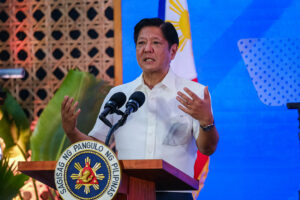
The House has begun hearings on proposals to ban political dynasties, a bill long filed in Congress but repeatedly stalled for lack of support. President Ferdinand R. Marcos, Jr. had declared a measure seeking to outlaw political families from dominating government posts as a priority.
Public office in the Philippines has often been treated like heirlooms, being passed down from parents to children and even grandchildren that has entrenched families in the political system across generations and regions.
Members of political dynasties could skirt an anti-dynasty law if loopholes allow candidacy substitution, a mechanism in which another person replaces an initial candidate and has often been used for last-minute changes, Mr. Garcia said.
“It should also be clarified whether a political dynasty may be substituted, and this provision should be included,” he said.
But the proposal is expected to undergo significant revisions to accommodate the interests of several politicians, House Deputy Majority Leader and Party-list Rep. Ramon Rodrigo L. Gutierrez said.
“This would take a lot of compromise, especially the conditions of the political climate, and considering this is a very political bill,” he told the same hearing.
Most lawmakers come from political dynasties, with eight of 10 belonging to political families, according to a report by the Philippine Center for Investigative Journalism.
“This hearing is convened not to attack families, not to single out individuals and not to rewrite political history,” Lanao del Sur Rep. Ziaur-Rahman Alonto Adiong, the House Elections Committee chief, told the hearing.
Mr. Garcia said lawmakers should weigh the timeframe for the bill’s approval as the 2028 presidential elections near, noting that a late approval of an anti-dynasty measure could render it inexecutable for that cycle.
“We have to understand that there is only about one year and six months left before the filing of candidacies for the important 2028 election,” he said. “So practically, that is the only period we are talking about to pass the anti-political dynasty measure.”
“We have a bit of a problem with the timeline. Hopefully, it will really be passed,” he added. — Kenneth Christiane L. Basilio