Tesla revenue slips for first time as politics, backlash cloud EV outlook

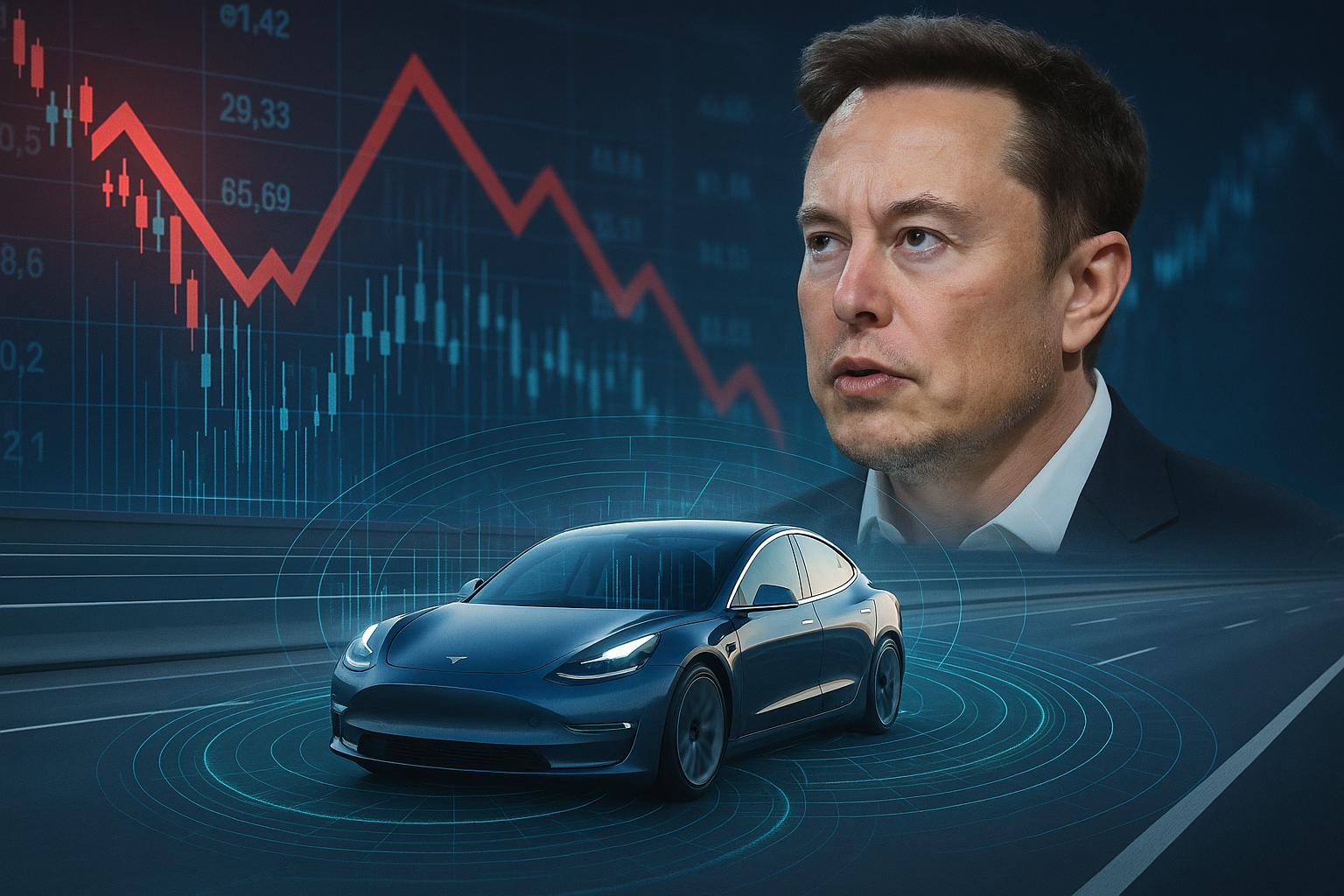
Tesla Inc. posted its first annual revenue decline in 2025, underscoring how political shifts and growing consumer unease with Elon Musk’s activism are complicating the electric-car maker’s growth story just as competition intensifies.
The company said fourth-quarter revenue fell 3% from a year earlier to $24.9 billion, broadly in line with analyst expectations, bringing full-year sales to $94.8 billion, also down 3%.
Net income slides
Adjusted net income slid 16% in the quarter to $1.8 billion, topping Wall Street estimates but highlighting mounting pressure on profitability.
The performance marks a turning point for a company that spent years redefining expectations of growth in the global auto industry.
Tesla has been hit by President Donald Trump’s decision to roll back key US electric-vehicle incentive programs, a move that has raised effective purchase prices for consumers.
At the same time, sales in the US and Europe have softened as some buyers recoil from Musk’s increasingly vocal political positions, including support for far-right parties.
Vehicle deliveries in the fourth quarter fell 16% from a year earlier to 418,227 units, missing market expectations and cementing Tesla’s loss of its crown as the world’s largest EV maker to China’s BYD.
The drop in volumes fed directly into margins, with operating margin slipping to 5.7% from 6.2% a year earlier, a far cry from the double-digit levels Tesla once touted as proof of its manufacturing edge.
No Optimus robot yet
Rather than doubling down on traditional models, Musk has leaned harder into a long-term vision centred on autonomy and robotics.
Tesla is pitching self-driving Cybercabs and humanoid Optimus robots as the company’s next growth engines, arguing they could unlock trillion-dollar opportunities. Yet execution remains elusive.
Tesla has yet to produce a single Optimus robot at scale and trails rivals such as Alphabet’s Waymo in deploying vehicles that operate in US cities without human safety drivers.
Investors, for now, have largely backed Musk’s ambition.
In November, shareholders approved a new stock-based compensation plan that could eventually be worth up to $1 trillion if a sweeping set of targets is met.
A Delaware court last month reinstated a $56 billion pay package that had been struck down as excessive, reinforcing Musk’s grip on the company even as financial performance cools.
The tension between Tesla’s near-term challenges and its long-term promises is sharpening.
With EV incentives fading, price competition intensifying and political risk entering the demand equation, Tesla’s core car business is under strain.
Whether bold bets on autonomy and artificial intelligence can offset those headwinds remains the central question for investors heading into 2026.
The post Tesla revenue slips for first time as politics, backlash cloud EV outlook appeared first on Invezz