Celebrating Japan and its Foundation Day

The Philippines has its Independence Day. The US has the Fourth of July. And Japan, dissimilar to most countries that celebrates its freedom from colonial powers or independence through revolutions, has its National Foundation Day.
Known in the country as Kenkoku Kinen no Hi, this observance is dedicated to commemorating the founding of the nation and fostering a love for the country.
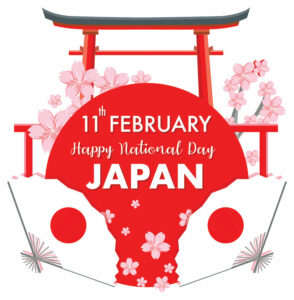
Annually celebrated on Feb. 11, the holiday remembers the traditional enthronement of Japan’s first emperor, Emperor Jimmu. Early Japanese historical texts, such as the Nihon Shoki, place this event nearly three millennia ago in 660 BCE. Although modern scholars generally regard this date as legendary rather than historical, it continues to serve as a symbolic reference point for the perceived unbroken continuity of the Japanese imperial lineage and the nation.
The holiday itself has gone through several changes. It was first established in 1873 during the Meiji era as Kigensetsu (Empire Day). Following Japan’s defeat in World War II, the observance was abolished. It later returned in a revised form when the government reinstated it in 1966, with the first renewed celebration held in 1967.
Compared to typical celebrations of other countries’ national holidays with fireworks and massive street parties, Japan’s founding anniversary is commemorated in a relatively toned-down manner, similar to how the Philippines marks its Independence Day. Many Japanese people treat it simply as a day of rest rather than a day of intense patriotic demonstration. However, there are still several ways they observe the day.
On this day, many Shinto shrines hold ceremonies known as Kenkoku-sai. Shinto is Japan’s indigenous, nature-revering spirituality focused on practicing rituals to honor spirits and deities found in nature, ancestors, and places.
The most notable observances take place at Meiji Jingu in Tokyo and Kashihara Jingu in Nara. Kashihara Jingu holds special importance because it is dedicated to the first emperor himself and stands on the traditional site of his accession. Visitors to these shrines can expect ceremonial processions, performances of classical music, and appearances by officials and other dignitaries offering formal prayers.
One of the few major public spectacles is a commemorative parade in Tokyo, which usually follows a route between Meiji Jingu Gaien and Meiji Jingu itself. The parade features marching bands, portable shrines (mikoshi), and participants carrying Japanese flags. The festive atmosphere makes it a popular attraction, particularly for those in the Harajuku and Omotesando areas, as well as tourists, where it provides striking photo opportunities.
Much like how it’s celebrated in the country, the Japanese national flag, also known as the Nisshōki or Hinomaru, is commonly displayed on city buses, government offices, and some private establishments throughout the day. It is one of the rare occasions when the flag is so visibly present across the urban landscape.
While there have been no official announcements from the Japanese Embassy in the Philippines, the holiday is celebrated through various events in the Philippines as well.
Last year, esteemed dignitaries from the public and private sectors gathered to commemorate this significant occasion at a traditional event held in the country. The festivities featured a traditional Japanese dance, showcasing colorful kimono-clad performers. Among those in attendance were Japanese Ambassador to the Philippines Kazuya Endo, former Senate President Francis “Chiz” G. Escudero, former House Speaker Ferdinand Martin G. Romualdez, and Supreme Court Chief Justice Alexander G. Gesmundo, who shared a toast (kanpai) to mark the occasion.
Observed with their world-renowned discipline rather than spectacle, the National Foundation Day reflects Japan’s quiet yet enduring reverence for its origins, blending legend, history, and cultural continuity. — Jomarc Angelo M. Corpuz