Accountability test looms for Marcos after surviving House impeachment
By Chloe Mari A. Hufana and Aubrey Rose A. Inosante, Reporters
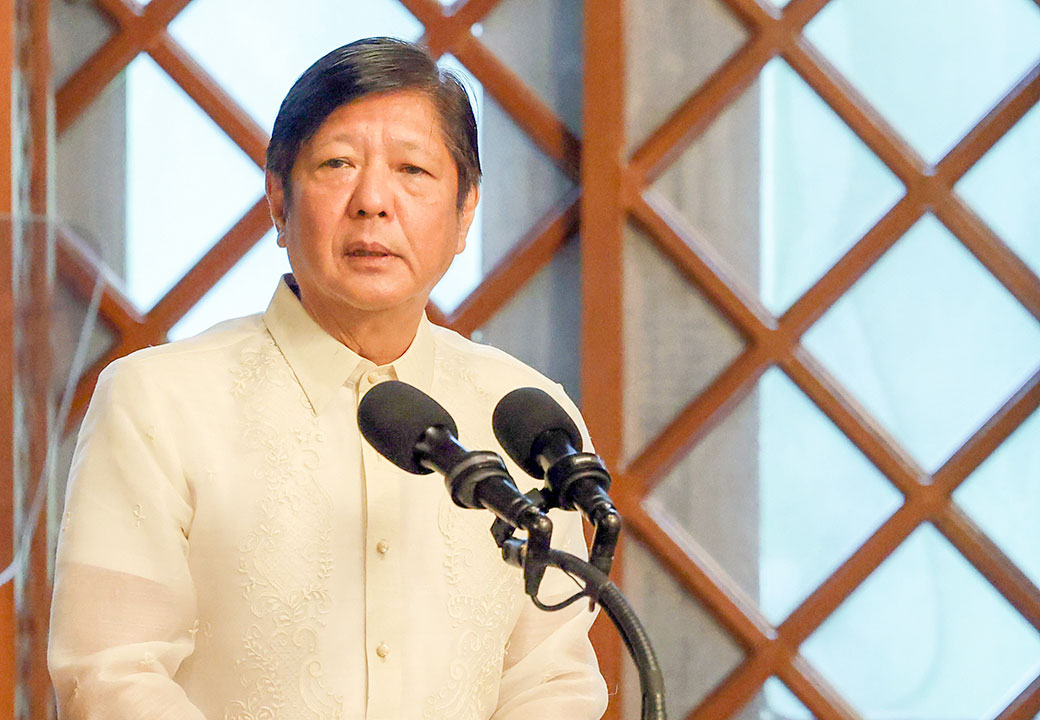
PRESIDENT Ferdinand R. Marcos, Jr. now faces a different test after lawmakers dismissed impeachment complaints against him: proving his administration can deliver accountability as scrutiny over flood control spending grows, analysts said.
“The real test is whether the administration can translate this political reprieve into demonstrable institutional reform and credible anti-graft outcomes,” Ederson DT. Tapia, a political science professor at the University of Makati, said via Facebook Messenger, adding that surviving impeachment does not end public scrutiny.
He noted that once impeachment is no longer an immediate threat, attention shifts to performance. “The more important question is what this means for public expectations of accountability, particularly in relation to the flood control controversy.”
Lawmakers voted 284-8, with four abstentions, to uphold the House Justice Committee’s recommendation to dismiss two impeachment complaints against Mr. Marcos for being insufficient in substance. The vote stopped the process before it could move to a Senate trial.
The complaints accused the President of corruption, betrayal of public trust and constitutional violations linked to irregularities in multibillion-peso flood control projects. The projects have drawn scrutiny after repeated severe flooding in several regions, prompting questions about procurement and implementation.
Hansley A. Juliano, who teaches political science at the Ateneo de Manila University, said the outcome reflects entrenched partisan alignments in Congress that could limit impeachment as a check on executive power.
“While the dismissal of the impeachment case allows Mr. Marcos’ survival in the short term, it highlights the difficulty of accountability if the House and Senate remain divided into clear partisan factions,” he said.
Political analysts said the result was widely anticipated. The administration holds a commanding majority in the lower chamber, making it unlikely that the complaints would advance.
The vote underscored the importance of legislative numbers in impeachment proceedings, which are political as well as legal in nature.
Mr. Tapia noted that impeachment is an extraordinary constitutional mechanism. Dismissal at the committee level, he said, does not resolve the governance issues raised by the allegations.
In the near term, the decision strengthens Mr. Marcos by removing an institutional threat and reinforcing alignment between the Executive and the House. But analysts said political survival increases the burden to show tangible results.
Flood control projects remain sensitive because they involve large public spending and public safety. Recurring floods have intensified scrutiny of whether infrastructure funds are being used effectively.
“If the administration wishes to convert political survival into durable legitimacy, it must demonstrate concrete action,” Mr. Tapia said. He cited transparent audits, prosecutions where evidence warrants them and reforms in procurement and project monitoring.
Mr. Juliano warned that prolonged partisan divisions could erode public trust in institutions, especially if accountability efforts are seen as selective.
While the situation increases the stakes for long-term accountability, it also risks alienating the public if Congress is viewed as unreliable, he said.
The impeachment episode unfolded against tensions between allies of Mr. Marcos and supporters of Vice-President Sara Duterte-Carpio, exposing fractures within the country’s dominant political coalition.
‘ECONOMIC CONSEQUENCES’Attention now shifts to separate impeachment complaints filed against Ms. Duterte, signaling that institutional conflict among senior officials would continue.
Persistent impeachment battles involving the country’s top leaders could weigh on the economy and dampen medium-term growth prospects, according to GlobalSource Partners.
In a Feb. 14 report, GlobalSource country analysts Diwa C. Guinigundo and Wilhelmina C. Mañalac said efforts to unseat Mr. Marcos and Ms. Duterte risk eroding investor confidence and slowing capital inflows.
“Prolonged confrontation at the highest political level carries tangible economic consequences through investor uncertainty, reputational risk and reduced capital inflows,” the analysts said.
GlobalSource said the renewed impeachment efforts against Ms. Duterte carry implications beyond the corruption allegations. A conviction would permanently bar her from holding public office, raising the stakes ahead of the 2028 election.
While impeachment is meant to uphold accountability, the analysts warned that its use amid elite political rivalry could weaken public trust if it is seen as selective or strategic.
They added that political instability does not have to escalate into a full crisis to hurt the economy. Even small shifts in investor expectations can build over time and result in broader macroeconomic effects.
GlobalSource also pointed to irregularities in infrastructure projects that have weighed on growth, limited public spending and weakened both consumer and investor confidence.
“Executive and legislative focus diverted toward political survival reduces attention to structural reforms, fiscal strategy, and infrastructure execution, indirectly affecting medium-term growth prospects,” it added.