DoE to launch auction for coal areas on Feb. 27

By Sheldeen Joy Talavera, Reporter
THE DEPARTMENT of Energy (DoE) is set to open a bid round on Feb. 27 for coal areas with verified reserves, including the area operated by the country’s largest coal miner.
In a statement on Wednesday, the DoE said it will hold a bidding process dedicated to offering pre-determined areas for coal development and production, as part of efforts to support broader energy security.
Under the bid round, three coal areas will be offered covering 18 coal blocks. These include 10 blocks in Semirara Island in Caluya, Antique; five blocks across the municipalities of Benito Soliven, Naguilian, Cauayan in Isabela; and three blocks spanning the municipalities of Amulung and Iguig in Cagayan province.
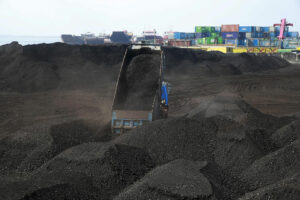
The auction will include the blocks covered under the coal operating contract that is currently held by Consunji-led Semirara Mining and Power Corp., the largest coal producer in the Philippines.
The government plans to open bidding for the contract, which ends next year, following the legal opinion that says it cannot be renewed.
From the day of the launch, interested parties will have 60 calendar days to submit their application documents. Opening of applications will be held on the same day as the deadline.
A pre-submission conference will be held 20 days after the launch to accommodate bidders’ inquiries and clarify requirements.
The bid round for pre-determined areas is a competitive process where identified resource areas are offered for development and production under a transparent evaluation and award mechanism.
The DoE said the auction aims to ensure “the orderly and responsible development and production of indigenous coal resources, while maintaining strict safeguards for public safety, environmental protection, and host-community welfare.”
The awarding of the contracts will be governed by the recently issued rules, which introduced a new type of contract that will accelerate the development of confirmed coal deposits.
Energy Secretary Sharon S. Garin said the government aims to “uphold the rule of law while safeguarding our indigenous energy resources.”
“Any future contract or continuation of operations must strictly comply with constitutional limits and demonstrably protect both the national interest and our host communities,” she said.
Asked for comment, Michael T. Toledo, chairman and president of Chamber of Mines of the Philippines, said that structured bid rounds show policy consistency, which helps build investor confidence, especially for long-term projects.
“Investors value stable rules, transparency, and responsible standards. Strengthening these benefits not only coal but the wider mining and natural resource sectors,” Mr. Toledo told BusinessWorld.
While coal dominates the Philippines’ power generation, it imports more than 90% of its requirements.
In 2024, the country imported 39.87 million metric tons of coal, up 12.2% from the previous year, data from the DoE as of April 2025 showed.
The country, however, is trying to move away from fossil fuels by aiming to increase the utilization of renewable energy to reduce exposure to volatile global prices and reduce carbon emissions.
“While the energy transition is underway, indigenous resources such as coal still play a role in ensuring reliable power supply and reducing dependence on imports,” Mr. Toledo said.
“Strategic development must therefore be guided by strong governance, environmental standards, and clear long-term policy direction,” he added.