US power demand to hit new highs through 2027 on AI-driven surge
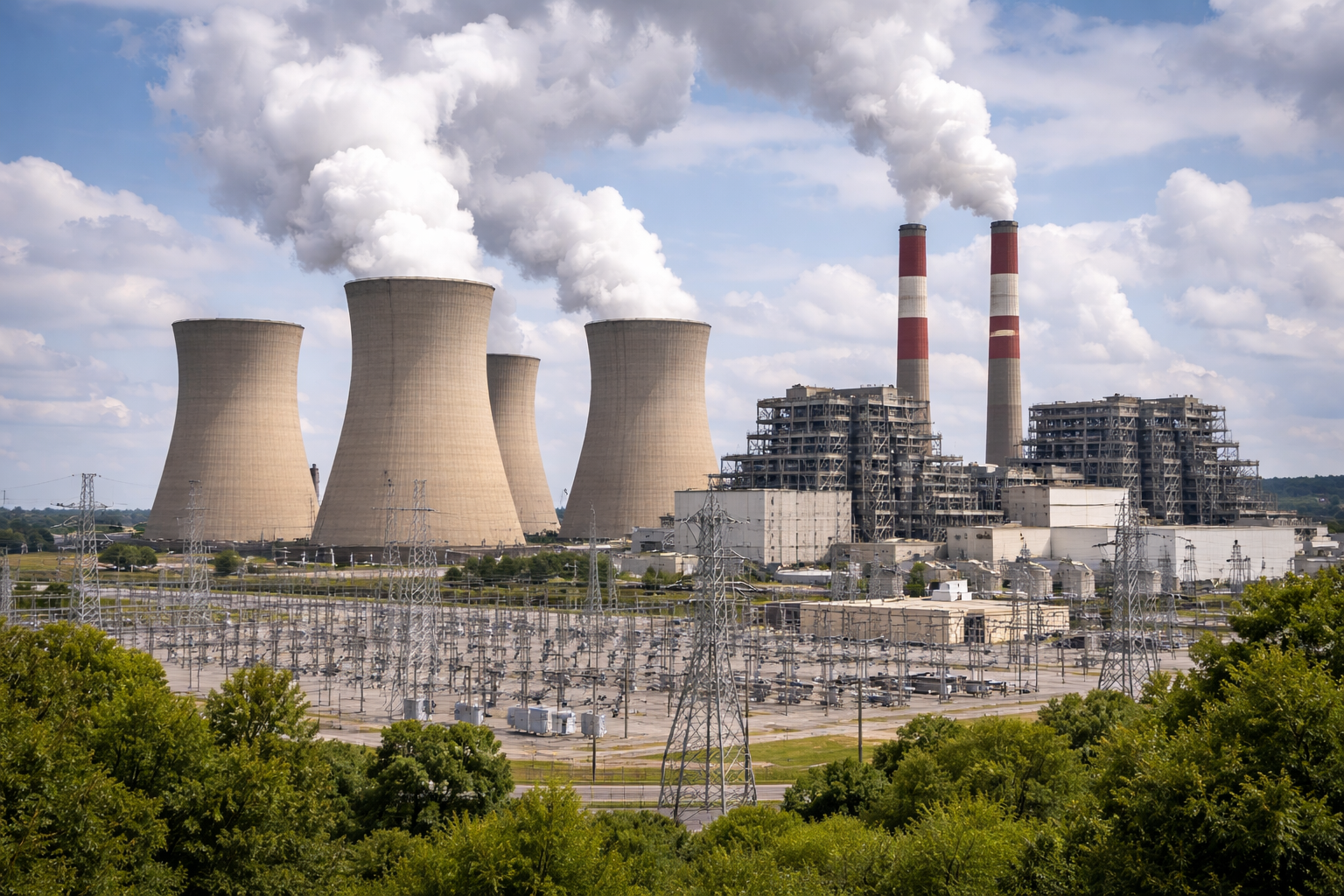
US electricity demand is set to extend its record-breaking streak through 2027, driven by rapid growth in artificial intelligence infrastructure, cryptocurrency operations, and broader electrification across the economy, according to the latest outlook from the Energy Information Administration (EIA).
The agency said power consumption, which reached a second consecutive annual record in 2025, will continue to climb over the next two years.
The EIA projects demand will rise from 4,195 billion kilowatt-hours (kWh) in 2025 to 4,244 billion kWh in 2026 and further to 4,381 billion kWh in 2027.
AI, crypto and electrification drive demand growth
The surge in electricity consumption is being fueled largely by expanding data centers dedicated to artificial intelligence and cryptocurrency, alongside increasing electrification in residential and commercial sectors.
Homes and businesses are using more electricity as they shift away from fossil fuels for heating and transportation, contributing to the upward trajectory in power demand.
The EIA expects power sales to rise across key consumer segments in 2026.
Residential consumption is projected to reach 1,520 billion kWh, up from a record 1,515 billion kWh in 2025. Commercial demand is forecast to climb to 1,528 billion kWh, exceeding the previous high of 1,493 billion kWh recorded in 2025.
Industrial consumption, however, is expected to reach 1,053 billion kWh, remaining below its historical peak of 1,064 billion kWh set in 2000.
Renewables gain share as coal declines
As electricity demand rises, the composition of US power generation is also shifting.
The EIA expects the share of coal in the power mix to continue declining, falling from 17% in 2025 to 16% in 2026 and 15% in 2027.
Natural gas is projected to remain relatively stable, accounting for 40% of generation in 2025, dipping slightly to 39% in 2026 before returning to 40% in 2027.
Renewable energy is expected to gain ground, with its share increasing from around 24% in 2025 to 25% in 2026 and 27% in 2027.
Meanwhile, nuclear power’s contribution is projected to remain steady at 18% throughout the period.
The shift underscores the growing role of renewables in meeting rising electricity demand, even as traditional energy sources continue to play a significant role in the overall mix.
Gas demand shifts toward power generation
Natural gas consumption patterns are also expected to evolve over the coming years.
The EIA projects that gas sales to residential, commercial, and industrial users will decline in 2026.
Residential demand is forecast to fall to 12.6 billion cubic feet per day (bcfd), compared with a historical high of 14.3 bcfd recorded in 1996.
Commercial demand is expected to ease to 9.4 bcfd, below its 2025 peak of 9.9 bcfd, while industrial consumption is projected at 23.2 bcfd, down from a record 23.8 bcfd in 1973.
In contrast, gas demand for power generation is expected to rise to 36.1 bcfd, approaching the all-time high of 36.8 bcfd seen in 2024.
The outlook highlights how natural gas continues to play a crucial role in electricity generation, even as overall consumption patterns shift and renewable energy gains market share.
The post US power demand to hit new highs through 2027 on AI-driven surge appeared first on Invezz