
Smart Cities and IoT: Infrastructure, Mobility and Urban Services

Urban environments are undergoing a structural transformation driven by data, connectivity, and digital infrastructure. As cities face mounting pressure from population growth, climate constraints, and resource limitations, technology is increasingly being deployed to improve operational efficiency and quality of life. Within this context, Smart Cities have emerged as a strategic framework for integrating digital systems into urban planning and services.
At the core of Smart Cities lies the Internet of Things (IoT), enabling real-time visibility across infrastructure, mobility networks, and public services. By connecting physical assets to digital platforms, cities can optimize operations, reduce costs, and support more responsive governance. However, the implementation of Smart Cities raises complex technical, organizational, and economic questions that extend far beyond sensor deployment.
Key Takeaways
- Smart Cities rely on IoT infrastructure to collect, process, and act on real-time urban data.
- Key domains include mobility, energy management, public safety, and environmental monitoring.
- Multiple connectivity technologies coexist, from LPWAN to 5G and fiber backbones.
- Data integration and interoperability remain major technical and organizational challenges.
- Long-term success depends on scalable architectures, governance models, and sustainable business cases.
What is a Smart City?
Smart Cities refer to urban environments that leverage digital technologies—particularly IoT—to monitor, manage, and optimize infrastructure, mobility systems, and public services in real time. This involves embedding sensors, connectivity, and data platforms into physical assets such as roads, buildings, utilities, and transportation systems.
In the broader IoT ecosystem, Smart Cities represent one of the most complex and large-scale deployments, combining heterogeneous devices, multiple communication layers, and diverse stakeholders. Unlike isolated industrial IoT systems, Smart Cities require cross-domain integration, spanning public infrastructure, private services, and citizen-facing applications.
The objective is not solely technological. Smart Cities aim to improve urban efficiency, reduce environmental impact, and enhance service delivery, while balancing economic viability and regulatory constraints.
How Smart Cities work
The architecture of Smart Cities typically follows a multi-layered model, combining edge devices, communication networks, data platforms, and application layers.
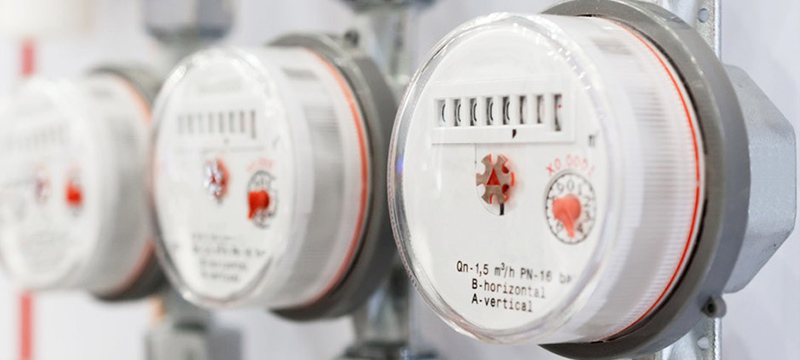
At the device layer, sensors and actuators are deployed across urban assets. These include traffic sensors, environmental monitors, smart meters, surveillance systems, and connected infrastructure components. Devices collect data such as traffic flow, air quality, energy consumption, or occupancy levels.
Connectivity forms the backbone of Smart Cities infrastructure. Depending on the use case, cities deploy a mix of technologies, including low-power wide-area networks (LPWAN), cellular IoT (LTE-M, NB-IoT), Wi-Fi, and increasingly 5G. Each technology addresses different requirements in terms of bandwidth, latency, coverage, and energy consumption.
Data is transmitted to centralized or distributed platforms, often hosted in cloud or edge environments. Edge computing is increasingly used to process data closer to its source, reducing latency and bandwidth usage—particularly critical for applications such as traffic control or public safety.
At the platform layer, IoT platforms aggregate, normalize, and analyze data from multiple sources. This enables interoperability across systems and supports analytics, visualization, and automation. Application layers then translate these insights into operational decisions, such as adjusting traffic signals, managing energy distribution, or optimizing waste collection routes.
Key technologies and standards
The technological foundation of Smart Cities is diverse, reflecting the wide range of use cases and operational requirements.
- Connectivity technologies: LPWAN (LoRaWAN, Sigfox), cellular IoT (NB-IoT, LTE-M), 5G, Wi-Fi, and fiber backhaul networks.
- Edge computing: Distributed processing nodes that enable low-latency decision-making at the network edge.
- IoT platforms: Middleware solutions that manage device connectivity, data ingestion, and analytics.
- Data standards and interoperability frameworks: Protocols such as MQTT, CoAP, and REST APIs for device communication and integration.
- Digital twins: Virtual representations of urban systems used for simulation and predictive analysis.
- Security frameworks: Identity management, encryption, and secure device provisioning to protect urban infrastructure.
Standardization remains an ongoing challenge. While some frameworks exist, Smart Cities deployments often involve legacy systems and proprietary technologies, requiring integration layers and custom development.
Main IoT use cases
Smart Cities encompass a broad set of applications, each addressing specific urban challenges.
- Smart mobility: Traffic management systems use real-time data to optimize signal timing, reduce congestion, and improve public transport efficiency. Connected parking solutions guide drivers to available spaces, reducing emissions and travel time.
- Energy management: Smart grids and connected meters enable dynamic energy distribution, demand response, and integration of renewable sources.
- Environmental monitoring: Sensors track air quality, noise levels, and weather conditions, supporting regulatory compliance and public health initiatives.
- Waste management: IoT-enabled bins monitor fill levels and optimize collection routes, reducing operational costs and emissions.
- Public safety: Surveillance systems, connected lighting, and emergency response platforms improve situational awareness and response times.
- Smart buildings: Connected systems manage heating, ventilation, lighting, and occupancy to improve energy efficiency and user comfort.
These use cases are often interconnected. For example, mobility data can inform environmental strategies, while energy consumption patterns influence urban planning decisions.
Benefits and limitations
The deployment of Smart Cities offers several operational and societal benefits, but also introduces technical and organizational constraints.
Benefits include:
- Improved operational efficiency through data-driven decision-making.
- Reduced environmental impact via optimized resource usage.
- Enhanced citizen services and user experience.
- Greater visibility across infrastructure and urban systems.
Limitations and challenges include:
- Interoperability: Integrating heterogeneous systems remains complex.
- Scalability: Managing millions of connected devices requires robust architectures.
- Security risks: Urban infrastructure becomes a target for cyber threats.
- Data governance: Ownership, privacy, and regulatory compliance are critical concerns.
- Economic viability: Many projects struggle to demonstrate clear return on investment.
Trade-offs are inherent in system design. For example, low-power networks offer extended battery life but limited bandwidth, while high-performance networks increase cost and energy consumption.
Market landscape and ecosystem
The Smart Cities ecosystem involves a wide range of stakeholders, each contributing to different layers of the value chain.
- Device manufacturers: Provide sensors, gateways, and embedded systems.
- Connectivity providers: Telecom operators and LPWAN network providers deliver communication infrastructure.
- Platform vendors: Offer IoT platforms for device management, data analytics, and application development.
- System integrators: Design and deploy end-to-end solutions, often combining multiple technologies.
- Public sector authorities: Define requirements, manage infrastructure, and ensure regulatory compliance.
Collaboration between public and private sectors is essential. Many Smart Cities initiatives rely on public-private partnerships, where investment, risk, and operational responsibilities are shared.
The market remains fragmented, with varying levels of maturity across regions. Some cities adopt comprehensive strategies, while others implement isolated use cases without full integration.
Future outlook
The evolution of Smart Cities is closely tied to advances in connectivity, data processing, and artificial intelligence.
5G and future 6G networks are expected to support more demanding applications, including autonomous mobility and real-time urban control systems. Edge AI will enable faster decision-making directly at the device level, reducing reliance on centralized platforms.
Digital twins are likely to become more prominent, allowing cities to simulate scenarios, predict outcomes, and optimize planning. At the same time, regulatory frameworks around data privacy and cybersecurity will continue to shape deployment strategies.
Long-term success will depend on the ability to move from pilot projects to scalable, integrated systems. This requires not only technological maturity but also governance models that align stakeholders and ensure sustainable funding.
Frequently Asked Questions
What defines a Smart City?
A Smart City uses digital technologies, particularly IoT, to monitor and manage urban infrastructure and services in real time.
Which technologies are most important for Smart Cities?
Key technologies include IoT sensors, LPWAN and cellular connectivity, edge computing, cloud platforms, and data analytics tools.
How do Smart Cities improve mobility?
They use real-time data to optimize traffic flow, improve public transport efficiency, and enable services such as smart parking.
What are the main challenges in Smart Cities deployment?
Challenges include interoperability, scalability, cybersecurity, data governance, and securing long-term funding.
Are Smart Cities only about large metropolitan areas?
No, smaller cities and municipalities can also deploy Smart Cities solutions, often focusing on specific use cases such as energy or mobility.
How does IoT enable Smart Cities?
IoT connects physical assets to digital systems, enabling real-time data collection, analysis, and automated decision-making.
Related IoT topics
- Edge Computing for IoT
- LPWAN and Low-Power Connectivity
- Industrial IoT (IIoT)
- Digital Twin Technology
- IoT Device Management
- 5G for IoT Applications
The post Smart Cities and IoT: Infrastructure, Mobility and Urban Services appeared first on IoT Business News.