
IoT-Driven Embedded Finance: Transforming Customer Experience in Service Industries

The evolution of the Internet of Things (IoT) has transformed how businesses collect data, automate processes, and deliver services. But as connected devices become more deeply embedded in everyday operations, another layer of innovation is gaining traction alongside them: embedded finance.
Financial services are moving beyond traditional banks and separate payment systems. Now, they are built right into digital platforms, devices, and customer workflows. For service-based industries, this change is setting new standards for what a smooth customer experience means.
What Is Embedded Finance?
Embedded finance means adding services such as payments, loans, or insurance directly into non-financial platforms. This way, businesses can offer these services themselves, so customers do not have to go to outside providers.
This approach has changed industries like e-commerce and SaaS by enabling instant transactions and built-in financing. A 2024 Bain & Company report estimates that embedded finance could handle over $7 trillion in global transactions over the next 10 years, underscoring its rapid growth.
Where IoT Fits In
IoT is important for embedded finance because it creates ongoing, data-rich interactions between businesses and customers. Connected devices, such as smart home systems and wearable health monitors, provide real-time insights that can lead to services, maintenance, or upgrades.
What’s starting to happen now is that these alerts don’t stop at “something needs attention.” They push people closer to actually doing something about it.
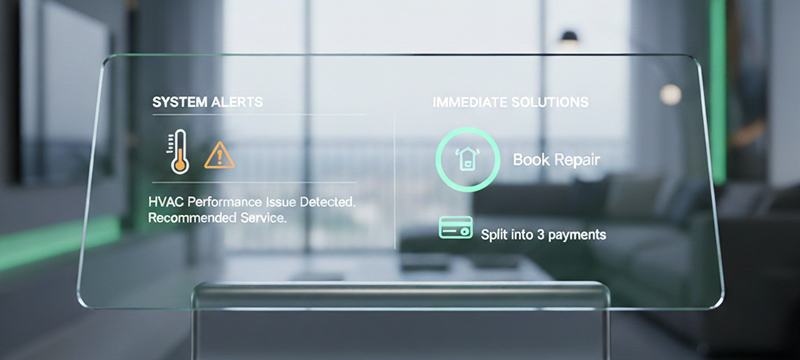
Say an HVAC system detects a performance issue—it doesn’t just log it; it nudges the user to book a repair. A health device might flag an issue, prompting scheduling follow-up care. Fleet platforms do something similar, surfacing maintenance needs as vehicles rack up mileage.
At that point, the gap between spotting the issue and paying to fix it is getting smaller. In a lot of cases, it’s happening in the same place, almost as part of the same decision.
Adding financial options directly into these workflows makes the process smoother and helps people act on insights more quickly.
The Customer Experience Layer
As IoT systems become more common, people are getting used to things happening faster—and with less effort on their part. If something needs attention, they expect to deal with it right away, without jumping between platforms or repeating steps.
That expectation doesn’t stop at the service itself. It carries over into how people pay.
This is where embedded finance starts to matter. Instead of sending customers somewhere else to figure out payment, the option shows up at the moment they’re already making a decision. In service-based industries, especially, timing can make a difference. If the process feels quick and straightforward, people are far more likely to move forward rather than put it off.
Customer Financing as a Core Component
Customer financing is one of the most important uses of embedded finance, especially for expensive services.
Upfront costs can make it hard for people to access services like healthcare, home repairs, or elective treatments. Even if customers see the value, not being able to pay all at once can cause them to delay or give up on getting the service.
Adding financing options directly into the customer experience makes it easier for people to pay. For instance, platforms like Cherry allow customers to split payments for services so they can stay within the provider’s system. This approach makes financing feel like a normal part of the process and meets customers’ needs today.
Business Impact: Beyond Payments
For many businesses, embedded finance is increasingly seen as less of a “nice-to-have” and more of a driver of revenue.
When payment and financing options are built into the experience, customers are more likely to move forward. It removes a point of hesitation. In some cases, it also leads people to choose larger or more comprehensive services than they originally planned. McKinsey has noted that this kind of integration can lift revenue per customer by 5 to 15 percent in certain industries, particularly those with higher upfront costs.
For companies already using IoT systems, the effect can be even more noticeable. When a device flags an issue or recommends a service, and the customer can immediately see a way to pay for it, the gap between decision and action narrows. Instead of adding steps, everything happens in one place—and that tends to translate into higher follow-through.
Challenges and Considerations
That said, it’s not as simple as flipping a switch and adding financing to your platform.
Once you step into anything that touches payments or lending, you’re dealing with a different set of rules. Financial services are tightly regulated, and businesses need to be clear on what’s required from a compliance standpoint before rolling anything out.
There’s also the question of data. IoT systems already handle a steady stream of information, and adding financial interactions on top of that raises the stakes. Protecting user data and keeping systems secure isn’t optional—it’s part of maintaining trust.
The customer experience is also important. When financing options are confusing or hard to find, they make things worse. The goal is to keep everything simple, so customers know what they’re signing up for without having to pause and figure it out.
The Convergence of IoT and Finance
Bringing IoT and embedded finance together is changing how companies offer and monetize their services. Connected devices are no longer just for monitoring or automation. More often, they are becoming entry points for transactions and financial choices.
As this trend continues, companies that add financial features to their digital platforms will be better prepared to meet changing customer needs. Embedded finance is no longer just a bonus. It is now a central part of modern service systems, combining insight, action, and payment into one smooth experience.
The post IoT-Driven Embedded Finance: Transforming Customer Experience in Service Industries appeared first on IoT Business News.