
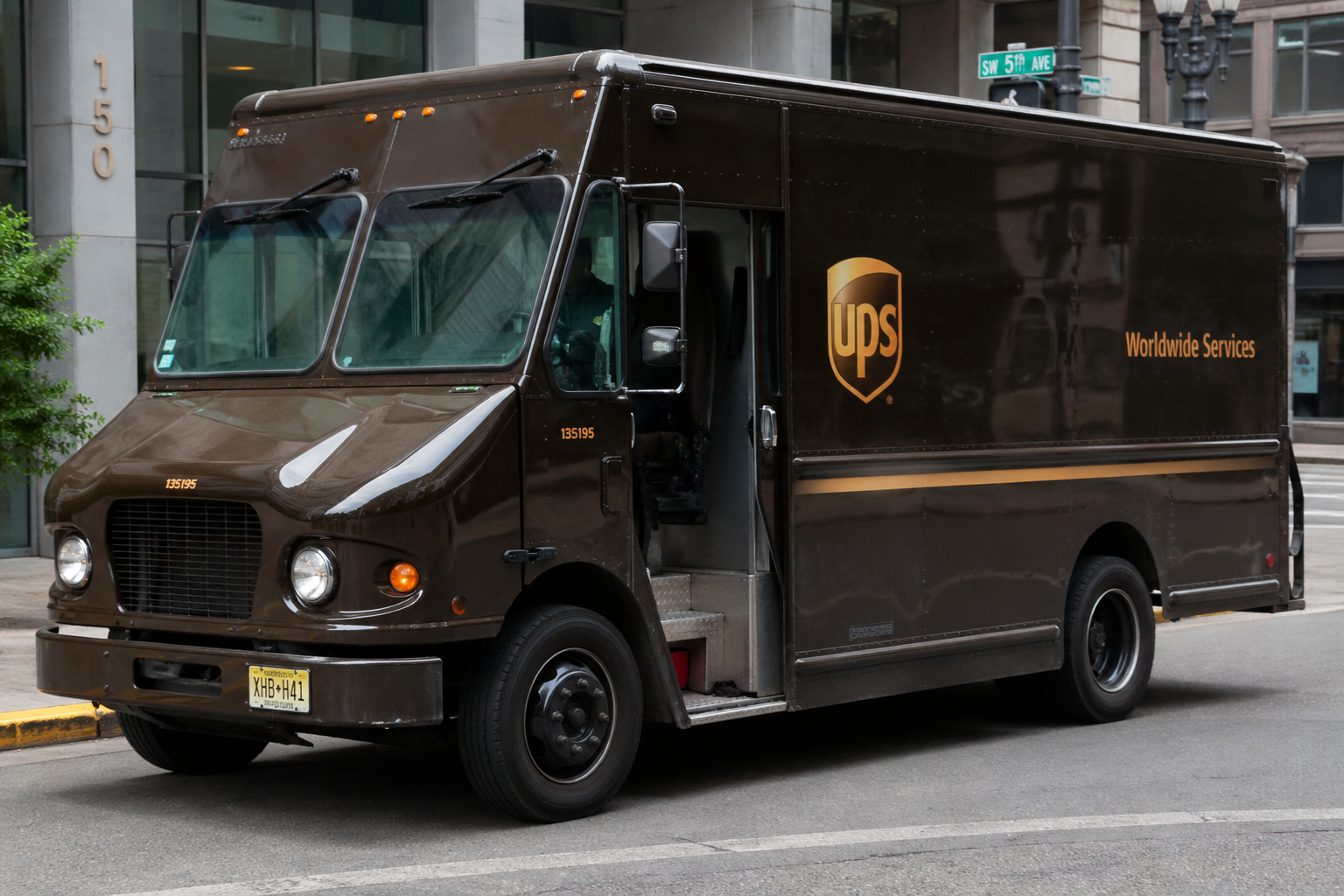
UPS stock declines as Q1 profit falls, growth rebound expected
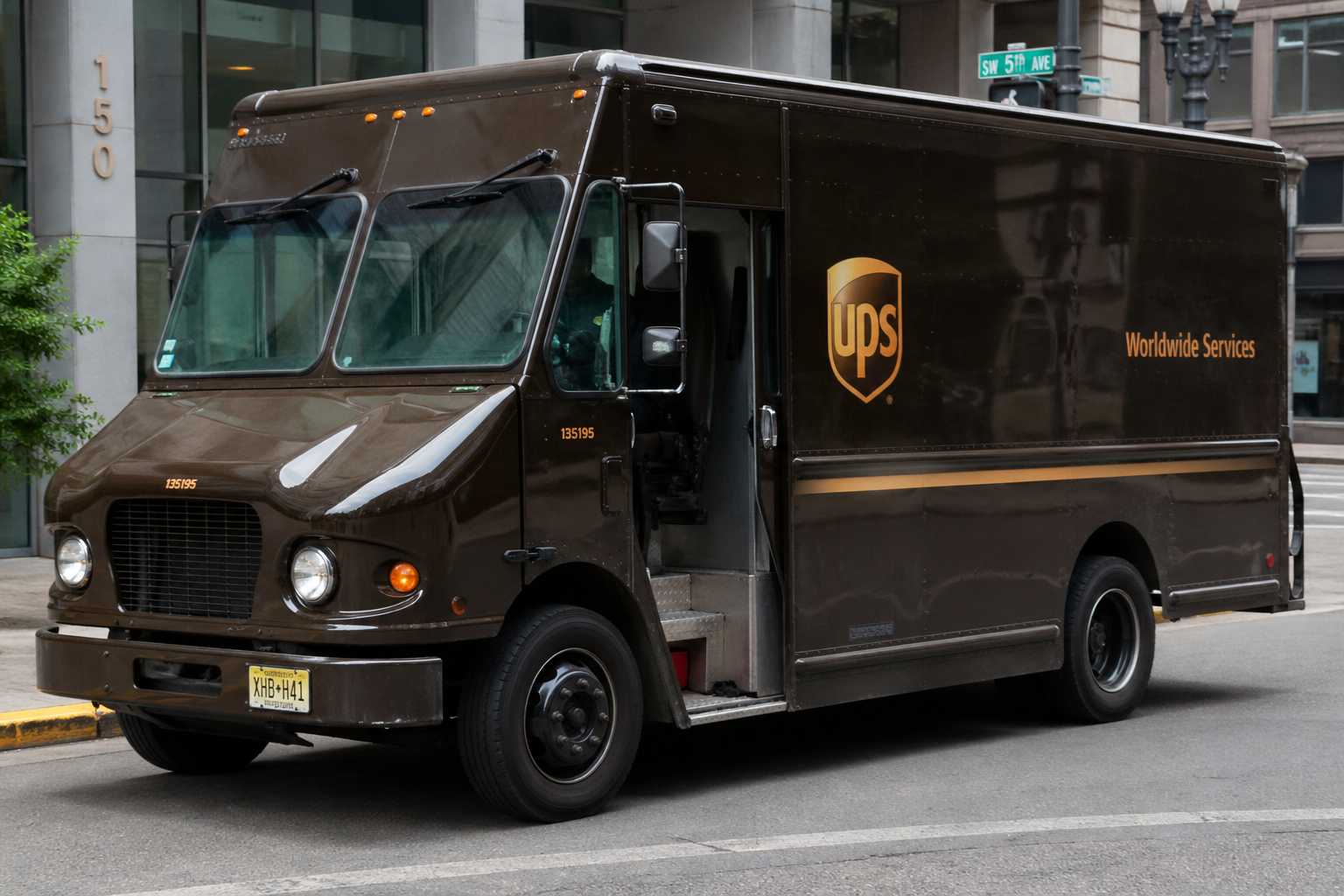
Shares of United Parcel Service fell about 3% in premarket trading on Tuesday after the parcel delivery giant reported lower profit and revenue for the first quarter, even as it signalled a return to growth in the coming months.
The results, however, exceeded Wall Street expectations on both the top and bottom lines, suggesting that the company’s restructuring efforts are beginning to stabilise performance.
Profit declines despite earnings beat
UPS reported a net profit of $864 million, or $1.02 per share, for the quarter, down from $1.19 billion, or $1.40 per share, a year earlier.
Adjusted earnings came in at $1.07 per share, ahead of analysts’ expectations of $1.01 per share, according to FactSet.
Revenue declined 1.6% year-on-year to $21.2 billion, but still surpassed forecasts of $20.98 billion.
The company’s domestic segment remained under pressure, with revenue falling 2.3%, primarily due to an anticipated decline in package volumes.
Transformation efforts begin to show results
Chief executive Carol Tomé said the first quarter marked a turning point for the company, as it executed a series of strategic initiatives aimed at improving efficiency and profitability.
“The first quarter of 2026 marked a critical transition period for UPS in which we needed to flawlessly execute several major strategic actions and we delivered,” Tomé said.
“With that behind us, we expect to return to consolidated revenue and operating profit growth, and adjusted operating margin expansion in the second quarter of this year.”
UPS has been undergoing a significant transformation, including scaling back volumes from Amazon, once its largest customer, as part of efforts to focus on more profitable shipments.
The company has also reduced its workforce, cutting tens of thousands of roles across delivery and warehouse operations, while increasing automation across its logistics network.
These measures have already yielded about $600 million in cost savings in the first quarter, with UPS targeting approximately $3 billion in savings for the full year.
Industry shift toward higher-margin logistics
UPS’s strategy mirrors broader changes across the logistics industry, with companies seeking to move away from low-margin e-commerce deliveries toward more specialised and higher-value services.
Rival FedEx is pursuing similar initiatives, including cost reductions and increased automation at sorting facilities.
The shift comes amid mounting pressure on the sector from evolving trade policies and changes in global shipping dynamics.
In particular, the removal of duty-free “de minimis” treatment for low-value imports linked to Chinese e-commerce platforms such as Shein and Temu has disrupted shipping volumes and profitability.
As a result, logistics firms are increasingly targeting segments such as temperature-controlled and time-sensitive shipments, which offer more stable margins.
Outlook remains steady
Looking ahead, UPS reaffirmed its full-year revenue forecast of about $89.7 billion, broadly in line with market expectations.
The company expects capital expenditures of roughly $3 billion and plans to return about $5.4 billion to shareholders through dividends, subject to board approval.
While near-term challenges remain, UPS’s management indicated that its restructuring efforts have laid the groundwork for improved financial performance, with growth expected to resume in the second quarter.
The post UPS stock declines as Q1 profit falls, growth rebound expected appeared first on Invezz