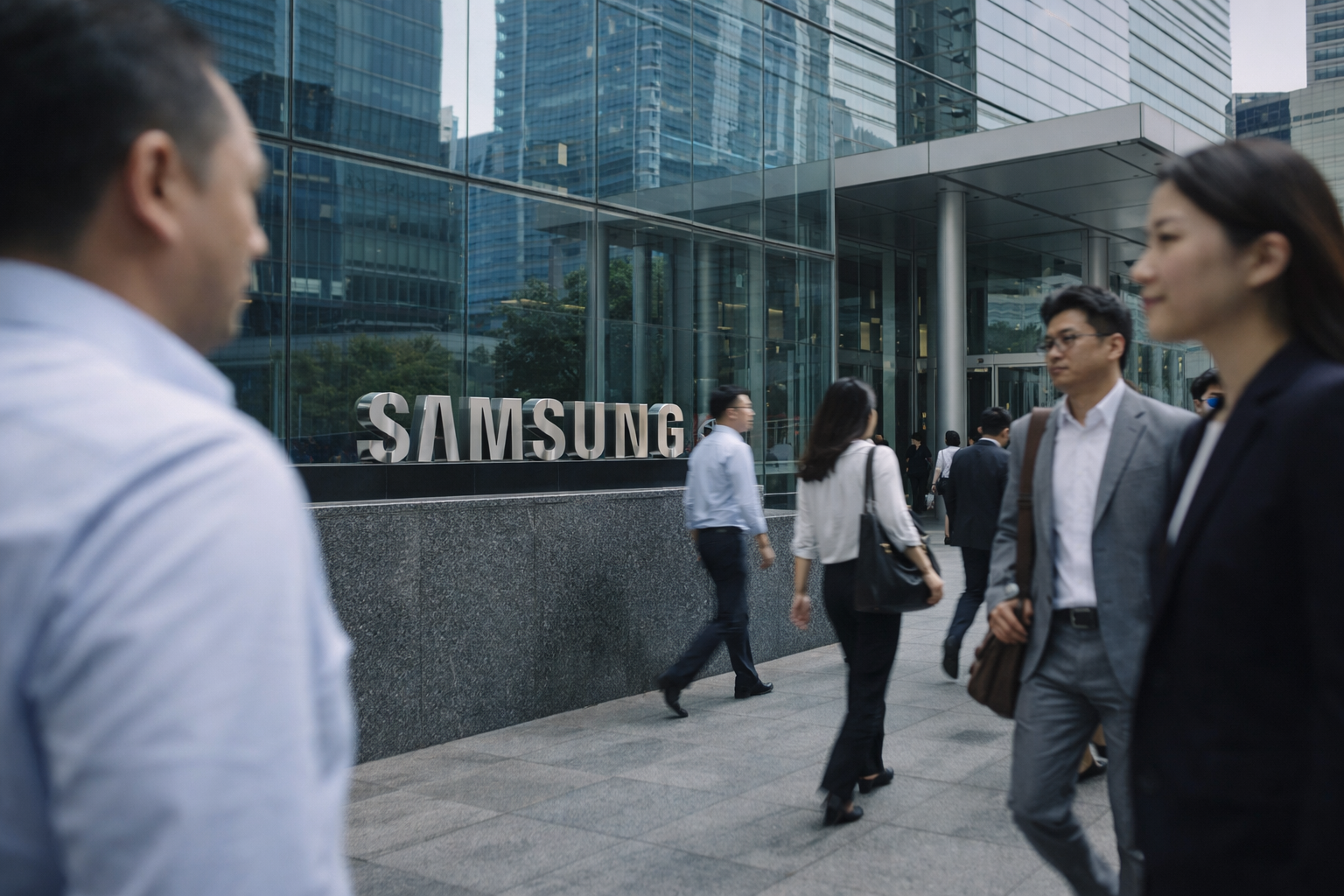
What wiped $66 billion off Samsung’s market value in hours?
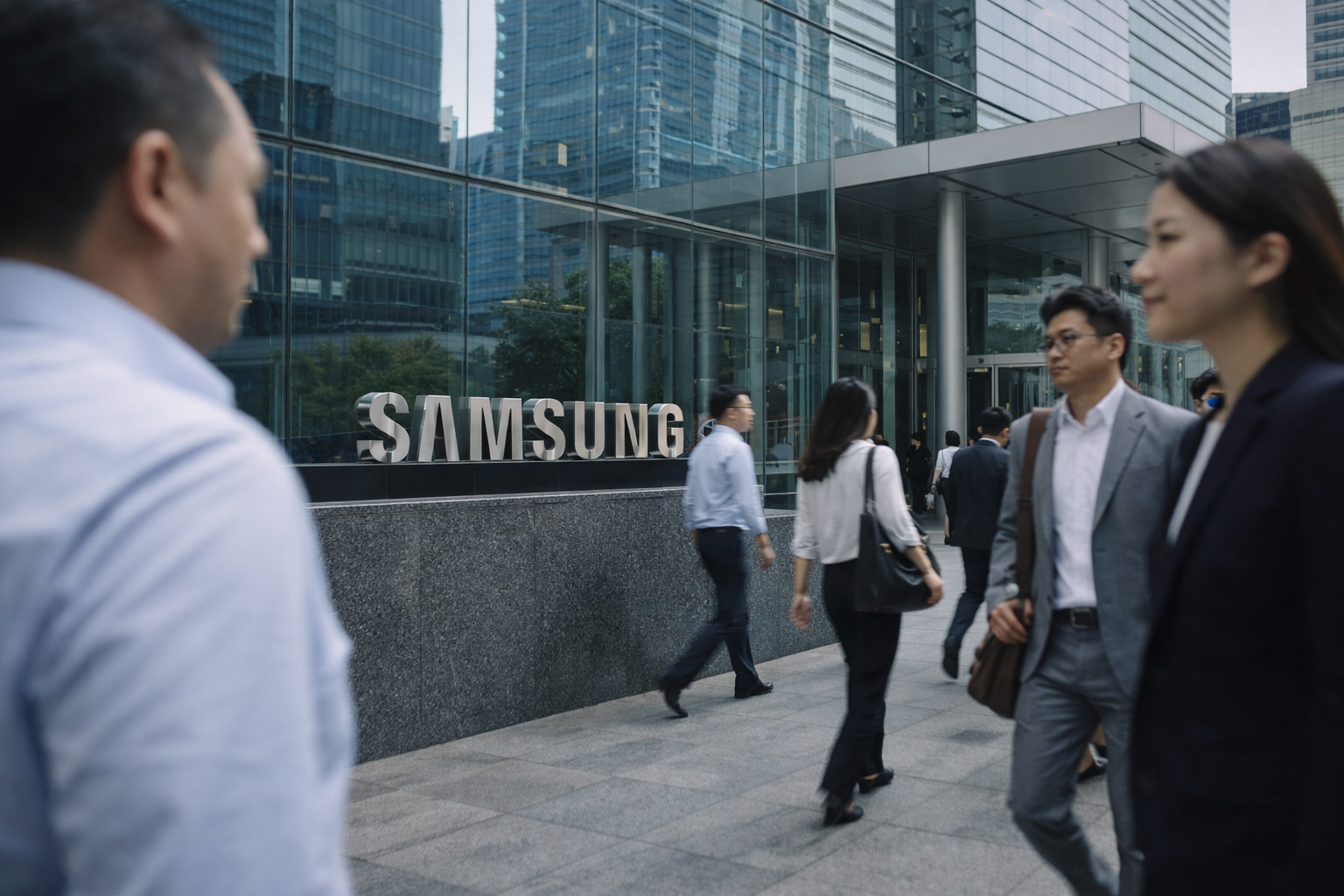
Samsung Electronics was expected to benefit from the AI boom, but is now facing a growing labor dispute.
The world’s biggest memory-chip maker found itself at the center of a sharp investor selloff on Wednesday after wage talks with its South Korean union collapsed and the threat of an 18-day strike moved closer.
Shares initially fell as much as 6%, before trimming losses after government intervention, showing how quickly labor risk can become a market story in a company this large.
The episode also came just days after Samsung’s market value briefly topped $1 trillion, making the reversal even more striking.
What the workers want
At the center of the dispute is pay, but the argument runs deeper than a simple bonus fight.
Samsung’s union says management should set aside 15% of operating profit for a performance bonus pool, scrap the current cap on bonus pay, and make the formula permanent.
The company has stuck to a 10% offer, leaving the two sides far apart after mediation failed.
The union now represents more than 90,000 members, or over 70% of Samsung’s South Korean workforce, after discontent spread during the AI-led profit surge.
The timing has only sharpened the confrontation as Samsung reported a record first-quarter operating profit of 57.2 trillion won, driven overwhelmingly by its chip business, which accounted for 53.7 trillion won of that total.
For workers, that level of profit strengthens the case for a larger share of the gains.
For management, it reinforces the need to keep cash flowing into capacity expansion, advanced memory, and research spending in a race against SK Hynix and TSMC.
Samsung stock: How much could a strike actually cost?
For investors, the key issue is not the politics of the dispute but the operating risk.
Samsung’s union has warned that more than 50,000 workers could walk out for 18 days from May 21 if no deal is reached, and the company’s chip operations are too tightly run to absorb that kind of disruption easily.
As per the analysts, even the threat of a strike has the potential to delay shipments, push up chip prices and benefit rivals.
In a business where fabs run around the clock, a stoppage is not just a payroll issue; it is a supply-chain problem.
That is why market reaction has been so abrupt with Samsung shares initially tumbling as much as 6% before paring losses.
After Samsung’s market capitalization crossed $1 trillion last week, a move like that is enough to erase a huge amount of value in a very short time.
Seoul steps in
South Korea’s government moved quickly to contain the damage.
Prime Minister Kim Min-seok urged continued dialogue and called the fallout a national economic concern, while Samsung said it regretted the collapse of talks and would keep trying to prevent a worst-case scenario.
That intervention helped steady sentiment and trimmed the stock’s losses, but it did not solve the underlying dispute. The May 21 strike deadline is still live.
The post What wiped $66 billion off Samsung’s market value in hours? appeared first on Invezz